We Signed the EU AI Pact. Here's Why It Matters.
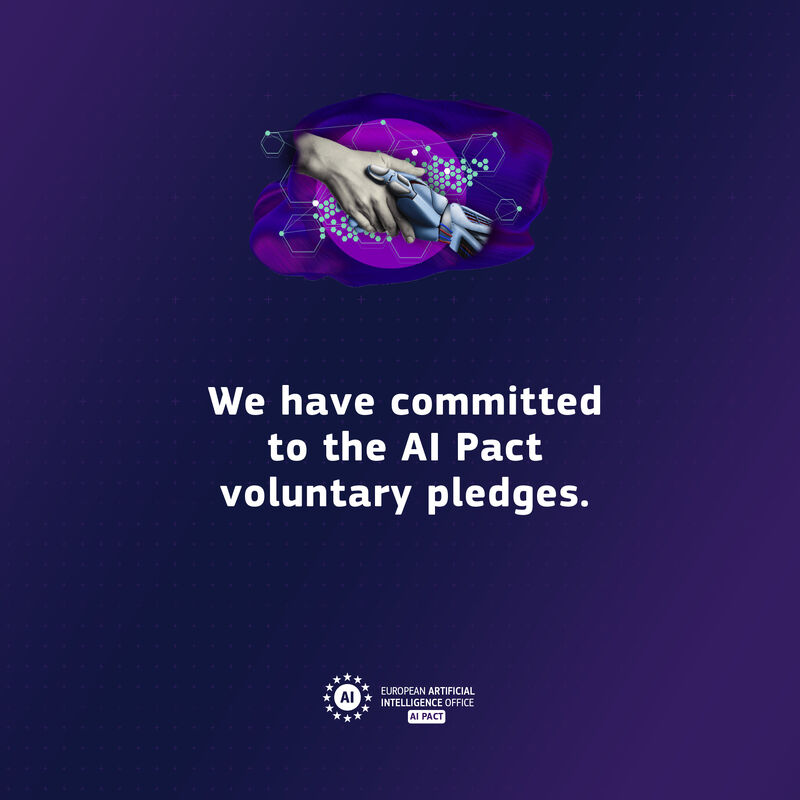
A few months ago, we became the first Romanian startup to sign the EU AI Pact, joining around 140 companies committing to implement the AI Act's key provisions ahead of the legal deadlines.
This isn't a press release moment. It's a stake in the ground about how we want to build.
What the AI Pact actually is
The European Commission's AI Office launched the AI Pact as a voluntary framework for companies willing to adopt AI Act principles before they become mandatory. Signatories commit to three core pledges: adopting an AI governance strategy, mapping high-risk AI systems, and promoting AI literacy among staff.
We signed because we were already doing most of this. Our tools handle sensitive data (career aspirations, psychometric profiles, employment status) and influence real decisions in people's lives. That's not something to take lightly.
What this means in practice
For us, responsible AI isn't a compliance checkbox. It's baked into how we build.
Our knowledgebase contains around 40,000 question-answer pairs specific to career counseling. Each pair was reviewed by human career advisors to verify accuracy, eliminate bias, and document corrective actions. We maintain risk registers covering technical risks (model drift, hallucinations, security) and user risks (bias, over-reliance, accessibility). Every AI interaction in our platforms includes transparency about what model is being used, what its limitations are, and how data is handled.
We run AI literacy workshops for our clients. Not because it's required, but because people using AI tools should understand what they're interacting with.
Why a small company bothers with this
There's a reasonable argument that startups should move fast and worry about compliance later. We disagree.
Trust is the product. When a student uses ZVAC to decode a job posting, or a career changer talks to WAI about their next move, they're sharing real uncertainties about their futures. If we cut corners on how we handle that, we're not building something worth building.
The AI Pact is one signal of that commitment. Being early to this doesn't make us special. It just means we'd rather set the standard than scramble to meet it later.
We'll publish updates as regulations evolve and as we hit implementation milestones.
Update, September 2025: We submitted our first formal compliance report to the AI Office, documenting our governance framework, risk assessments, and AI literacy initiatives. The full report is available on request.